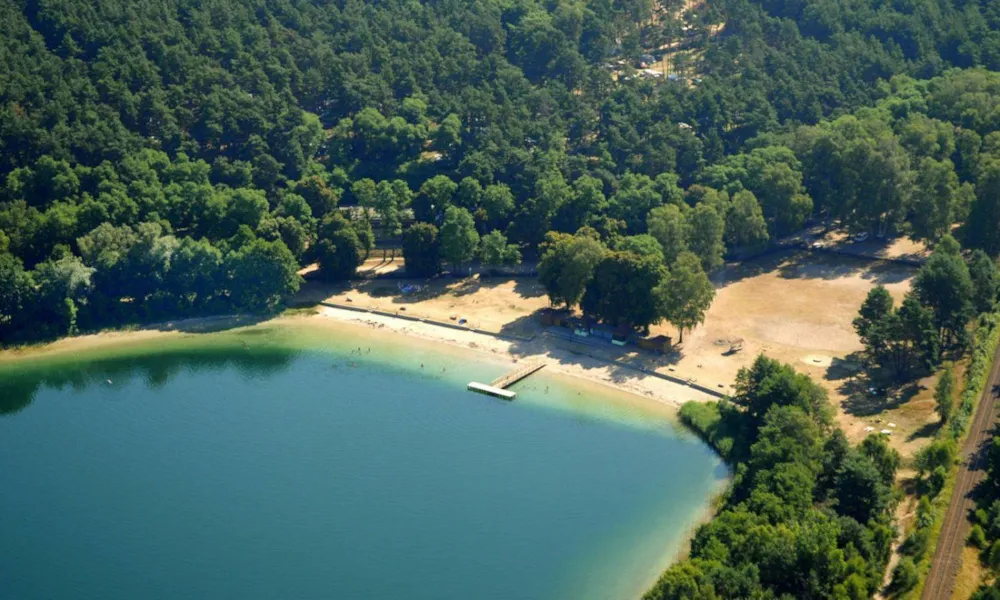
Main-Kinzig is a district in the state of Hesse, Germany, known for its scenic river valleys and historic towns. The region offers diverse landscapes ranging from the Main River valley to forested hills.
Browse Main-Kinzig campsites Neuschwanstein Castle, Schwangau Photo by Felix on UnsplashThe Main-Kinzig district was formed in 1974 through administrative reforms merging several smaller districts. The region has a rich medieval heritage with numerous castles and fortified towns reflecting its historical importance as a trade route area.
Regional trains follow the Kinzig river through Hanau, Gelnhausen, Bad Soden-Salmünster and Schlüchtern, with views of Spessart hillsides and the occasional castle ruin poking above the trees — a relaxed way to string together several campsite towns without a car.
The steep, tunnel-heavy stretch of the historic Frankfurt–Würzburg railway climbing through the Spessart forest near Schlüchtern and Sailauf is a noted piece of 19th-century railway engineering, still used by long-distance trains today.
The E1 long-distance trail crosses the Spessart and skirts the Vogelsberg foothills within Main-Kinzig, offering multi-day forest walking with connections to smaller local loops.
A waymarked route through the wooded Spessart hills, passing half-timbered villages, old mills and viewpoints over the Kinzig valley — good for a few days of moderate walking.
A river-valley walking route linking the towns of the Kinzig valley, mostly gentle gradients, easy to join or leave at train stations along the way.
A well-signed, family-friendly cycle route following the Kinzig river from Hanau up through Gelnhausen and Bad Soden-Salmünster towards Schlüchtern, largely on dedicated paths.
A cycle path built on former railway trackbed running through parts of the Kinzig valley towards the Rhön, gently graded since it follows old rail gradients.
A signposted cycling loop through the Spessart forest's small roads and tracks, taking in timbered villages and forest scenery on the region's eastern side.
A well-preserved medieval old town with the ruined imperial palace (Kaiserpfalz Barbarossa) founded by Frederick Barbarossa on an island in the Kinzig — one of the region's most striking historic sites.
Childhood home of the Brothers Grimm, with a moated Renaissance castle and old-town courtyard used for open-air fairy-tale performances in summer.
A small Kneipp and brine-spa town on the edge of the Spessart, with a landscaped Kurpark and gentle forest trails leading straight out of town.
A hilltop castle above the Kinzig valley, one of the larger and better-preserved medieval castles in Hesse, with a moat, keep and museum rooms open to visitors.
A quiet market town at the edge of the Spessart and Rhön, with a former Benedictine monastery church and easy access into surrounding forest and hill country.
Explore what remains of Frederick Barbarossa's 12th-century imperial palace, one of the best-preserved Romanesque secular ruins in Germany.
Steinau's castle and old town lean into their Grimm connections, with a museum and a Grimm-themed open-air theatre in the castle courtyard each summer.
This small brine-spa town has a proper Kurpark and gentle Kneipp facilities, a nice change of pace after days of hiking or cycling in the Spessart.
The Kinzig river and its flat-ish valley cycle path connect most of the region's towns, and stretches of the river are used for canoeing in summer.
The castle regularly hosts medieval and craft markets in its grounds — worth timing a visit around if you're in the area.
Main-Kinzig sits squarely in Hessian cooking territory: expect Handkäs mit Musik (a tangy sour-milk cheese marinated in vinegar, oil and onions), Grüne Soße (the region's famous cold herb sauce, usually served with boiled eggs and potatoes), and plenty of Apfelwein (Ebbelwoi) served in the traditional ribbed Bembel jug. The Spessart forest contributes game dishes (venison and wild boar in autumn) and wild mushrooms, while Bad Orb's brine-spa tradition has left a legacy of hearty, simple pork and cabbage dishes such as Rippchen mit Kraut. Bakeries in the smaller towns are worth a stop for Frankfurter Kranz cake and solid rye breads typical of the wider Hesse region.
The Roman frontier fortification (UNESCO World Heritage Site) runs through Main-Kinzig, with reconstructed watchtowers and fort remains such as the Limes tower near Hanau and fort sites around Rückingen and Marköbel.
A large nature park covering the Hessian side of the Spessart forest, with mixed woodland, old oak stands and a network of hiking and cycling trails — the main green backdrop for camping trips in this region.
Open-air fairy-tale theatre performances staged in the gardens of Schloss Philippsruhe in Hanau, running through the summer months.
Summer open-air Grimm fairy-tale performances held in the courtyard of Steinau Castle, a long-running local tradition.