Aveyron is a department in the Occitanie region known for its dramatic gorges, limestone plateaus, and medieval heritage. The landscape combines stunning natural beauty with charming historic villages and architectural treasures.
Browse Aveyron campsites Estaing, Aveyron, France Photo by Snap Wander on UnsplashAveyron was part of the ancient province of Rouergue and played a significant role during the medieval period with numerous fortified towns and abbeys. The region was historically known for its textile production and pilgrimage routes to Santiago de Compostela.
This regional line cuts straight through the Aveyron, following the Tarn and Lot valleys past Millau and Séverac-le-Château. It's one of the great under-the-radar scenic rail journeys in France, threading through gorges and causse plateaux with almost no tourist crowds.
A regional TER line that crosses the Viaduc du Viaur, a spectacular 19th-century iron rail viaduct (built by engineers from Gustave Eiffel's circle) spanning a deep wooded gorge near Tanus — worth riding just for the crossing.
The classic Le Puy route to Santiago de Compostela crosses the department via Nasbinals, the Aubrac plateau, Espalion, Estaing and Conques — one of the most historic long-distance trails in Europe.
Trails looping through the limestone plateaux and gorges of the Grands Causses, with dramatic cliff-edge views over the Tarn and Jonte canyons.
A loop across the high volcanic plateau of Aubrac, through wide-open grazing land, stone burons (shepherd huts) and beech forest — good for spotting the region's Aubrac cattle.
A long-distance mountain-biking itinerary crossing the Massif Central that passes through the Aubrac and Aveyron countryside, mixing plateau tracks with steep forest descents.
A converted former railway greenway near Pont-de-Salars/Tanus offering flat, family-friendly cycling through wooded valley scenery, close to the Viaur viaduct.
A medieval hilltop village built around the Romanesque Abbey Church of Sainte-Foy, famous for its tympanum carving and treasury — one of the most complete medieval villages in France.
A long, narrow village strung along a ridge below a ruined 13th-century royal fortress, overlooking a loop of the Aveyron river.
A tiny riverside village dominated by a restored medieval castle, often ranked among the most beautiful villages in France.
A fortified village on the Lot river with a château and old bridge, a stop on the Compostela pilgrim route.
A well-preserved 13th-century bastide town built around a large arcaded market square.
The village built into the Combalou cliffs where Roquefort cheese has been aged in natural limestone caves for centuries; several cellars are open for tours and tastings.
The tallest cable-stayed bridge in the world spans the Tarn valley near Millau; viewing areas and a visitor centre let you appreciate the scale up close.
Visit the Combalou caves in Roquefort-sur-Soulzon to see how the blue cheese ages in natural rock fissures, with tastings included.
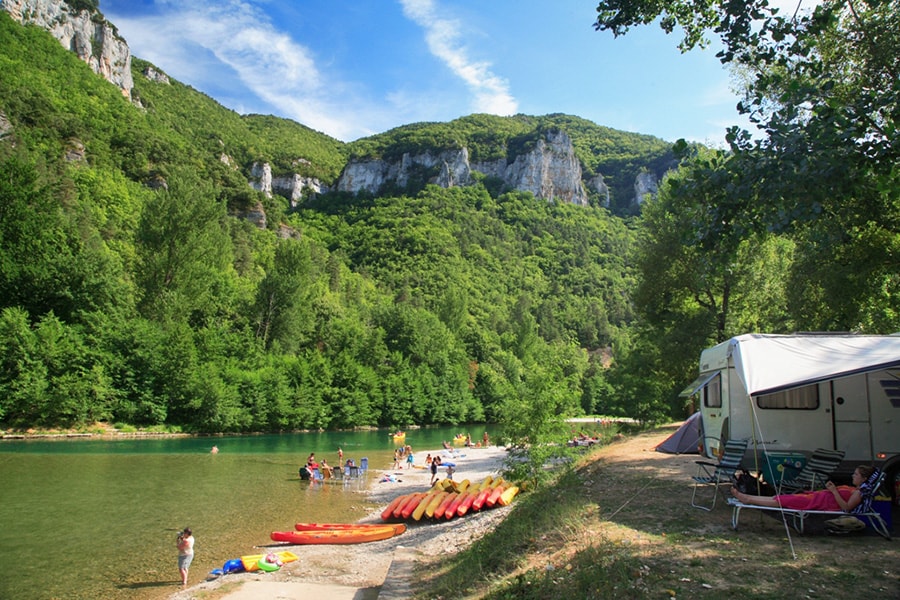
Paddle beneath limestone cliffs on the rivers that cut through the Grands Causses — a classic summer activity in the south of the department.
Even a day's walk on the GR65 pilgrim route gives a taste of the Aveyron's rural landscapes and medieval stopover villages.
Drive or hike across this high volcanic grassland dotted with stone burons and free-roaming Aubrac cattle, especially striking during the spring transhumance.
Aveyron cuisine is hearty, rural Massif Central fare built around cattle farming and mountain cheeses. Aligot — a stretchy blend of mashed potato and fresh Tomme de l'Aubrac cheese, traditionally beaten by hand — is the signature dish, usually served with grilled sausage or confit. Roquefort, aged in the natural caves of Roquefort-sur-Soulzon, is the department's most famous export, alongside Laguiole cheese (and the Laguiole folding knife, made in the town of the same name). Other local specialities include tripoux (stuffed offal parcels), farçous (herb and chard pancakes), saucisse de Rodez, and gâteau à la broche, a spit-roasted layered cake traditionally made for celebrations.
Listed as part of the 'Routes of Santiago de Compostela in France' UNESCO inscription, this 11th–12th century Romanesque abbey is renowned for its carved tympanum and medieval treasury.
This UNESCO cultural landscape covers much of the Grands Causses plateau in southern Aveyron, recognising centuries of sheep-farming and transhumance traditions.
A regional nature park covering the limestone plateaux and gorges of southern Aveyron, including the Tarn and Jonte canyons — good territory for hiking, climbing and canoeing.
A regional park spanning the volcanic Aubrac plateau across Aveyron, Lozère and Cantal, known for its open grasslands, lakes and traditional cattle-herding culture.
Held in late May, this festival celebrates the seasonal driving of Aubrac cattle up to summer pastures, with decorated herds parading through villages like Nasbinals and Aubrac.
A summer festival (July) in Rodez celebrating Occitan language, music and culture with concerts and street performances.
An annual jazz festival held in Millau in July, bringing concerts to venues around the town.